
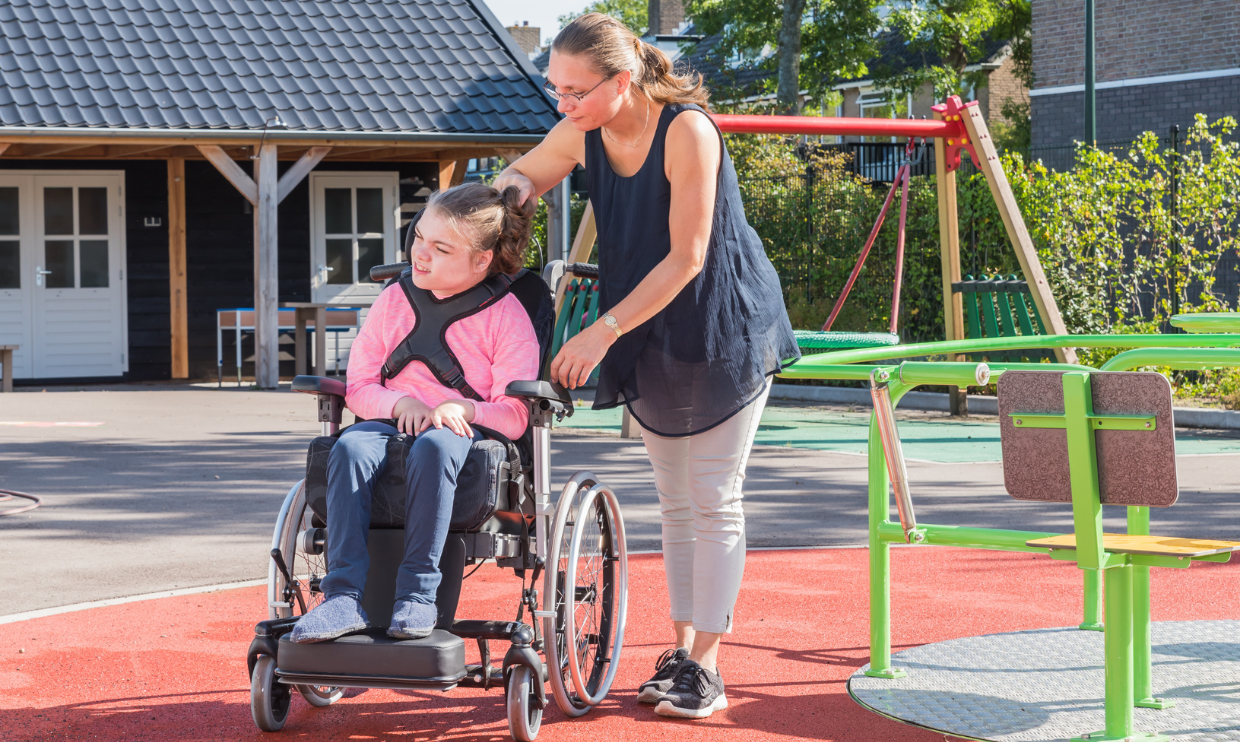
If you’ve ever sat in your car after an IEP meeting, replaying every word, wondering if you asked too many questions or not enough. If you’ve ever gone to bed carrying the weight of advocating for one child while trying to show up for your other children, your partner, your work, and yourself. If you’ve ever been made to feel like you’re “too much” simply because you refused to stop fighting for your child — this week’s newsletter is for you.
Parenting a disabled child asks more of us than most people ever see. This week, we’re talking about that invisible work: learning to trust ourselves, helping our kids find their own voices, supporting siblings, finding care that actually works, and remembering that we matter, too.

Dear mothers
“I came with a warning,” begins Lindsay Crain, Head of Content and Community here at Undivided, in her letter to mothers of disabled children. She speaks about the quiet self-doubt so many mothers carry, the experience of being dismissed, and ultimately learning to trust what you know about your child — a reminder and a reclaiming for anyone who’s ever second-guessed herself in the parking lot after an IEP meeting.
“I have been my daughter’s mother for over 16 years. She has complex, multiple disabilities. I have learned two things with equal clarity: who my daughter is, and how institutions manage mothers who know too much and refuse to pretend otherwise.”
Read a letter to mothers of disabled children.

Supporting our kiddos
It isn’t easy trying to help our kids grow into their own voice, step by step, in a world that makes it more challenging for them. How do we talk to them about their disability and history, and give them the skills to advocate for themselves? “Parents should be sensitive to the fact that yes, they’re the advocate for their child, but their child has to have meaningful, developmentally appropriate involvement in the process,” Dr. Cecily Betz of CHLA’s UCEDD Program tells us. This goes back to accepting and embracing their disability as an essential part of themselves, and the role we play in those conversations.
Supporting siblings
Many of us worry about how growing up alongside a sibling with a disability shapes our other kids — not just long-term, but in the small, everyday moments at home. Balancing everyone’s needs can feel like a constant juggling act. As Jessica Richards, LCSW, tells us, “It’s a lot on parents to manage and accommodate areas of individual difference. Most of what you’ve learned about parenting doesn’t apply — everything that your friends say, everything that your parents have guided you doesn’t work right. That is such an incredibly hard position to be in.”
Read more about sibling support.

Child care and self-care
It may all sound like a cliché, but caring for a child really does take a village — and it’s true, you really can’t pour from an empty cup (though we all try, right?). Self-care and child care often go hand in hand — seeking support is a great way to fill your own cup — but for kiddos with extra support needs, finding the right caregiver is rarely as simple as calling the neighborhood babysitter (as is taking a moment for ourselves without feeling guilty). “It really doesn’t matter what IT is as long as it’s for you and helps to add to YOUR cup,” Undivided Navigator Heather McCullough tells us. Read on for tips from parents and experts.
Read more on child care for extra support needs.
Read more on self-care for parents.
Dive deeper
Numbers to note: 3%
While more than 1 in 4 adults live with a disability and 1 in 6 children live with a developmental disability, people with disabilities make up less than 3% of broadcast scripted primetime television characters — and that number has been shrinking. Representation is so important; the stories our kids see and hear shape how they see the world. Clearly, we have a long way to go. Here are books, videos, shows, and other resources for kids — including children’s TV show characters with disabilities — to help spark meaningful conversations about disability acceptance and advocacy, plus books, TED talks, and other online resources for parents, too.
💌 Dear Undivided,
Can a sibling be an IHSS provider?
Yes, an IHSS recipient in California can hire their sibling as their IHSS provider. A sibling can serve as an IHSS provider starting at age 12, but if they’re under 18, they need a work permit. In addition, labor laws apply on the total number of hours allowed per day for minors.

Undivided Conversations → Streaming on Facebook and YouTube
Jessica Patay on Community, Grief, and Caregiving Motherhood → Saturday, July 4, 10:00 a.m. PT. Undivided Head of Undivided Content and Community, Lindsay Crain, sat down with Jessica Patay, founder of We Are Brave Together, a community supporting the caregiving moms who so often feel exhausted, overwhelmed, and isolated. In this video, they talk about finding people who genuinely get it, the grief of an “altered motherhood journey,” the cost of “good vibes only” culture, and why you should never apologize for advocating for your child — even if it makes you “that mom.”
Office hours
Join us on Wednesday, July 8, 12:00 p.m. PT for office hours with Undivided Director of Health Plan Advocacy, Leslie Lobel, who will be answering member questions about insurance, out-of-network claims, denials, appeals, and more! If you’re not a member yet, join here to participate→

 What activities and resources have meant the most to your family? Share in our private Facebook group for parents→
 One way to actually make time for self-care is to do it together as a family. Check out these ideas from Dr. Lyre Fribourg on our YouTube channel→
 Heading to a barbecue or party this weekend? Save this post on Instagram for quick tips to help your child have a safe and sensory-friendly time→
 Help other families and providers find our free resources on child care, sibling support, self-care, and more! Share on LinkedIn→