

If you’ve ever wondered, “Wait, is there a program that covers this?” you’re not alone. California has a patchwork of health plans, public benefits, and disability programs that can help pay for therapies, equipment, caregiving, and more — but figuring out which program covers what (and how they all work together) isn’t exactly intuitive. This week, we’re breaking down how to make the most of California public benefits, even ones you may not have heard of.

Paying for your child’s medical needs
Insurance is only one piece of the puzzle. When a therapy, medical supply, or piece of equipment isn’t covered, there may be other ways to get it funded—you just need to know where to look. Learn how California programs like Medi-Cal and Regional Center can help cover everything from durable medical equipment (DME) to alternative and out-of-network therapies when traditional funding falls short. Read more about funding.
Medi-Cal Dental
Dental care can get expensive, but it doesn’t have to. Medi-Cal Dental helps many California children access preventive care and other covered dental services at little or no cost. We’ll walk you through what’s covered, who qualifies, and how to use your child’s benefits. Read more about dental care.
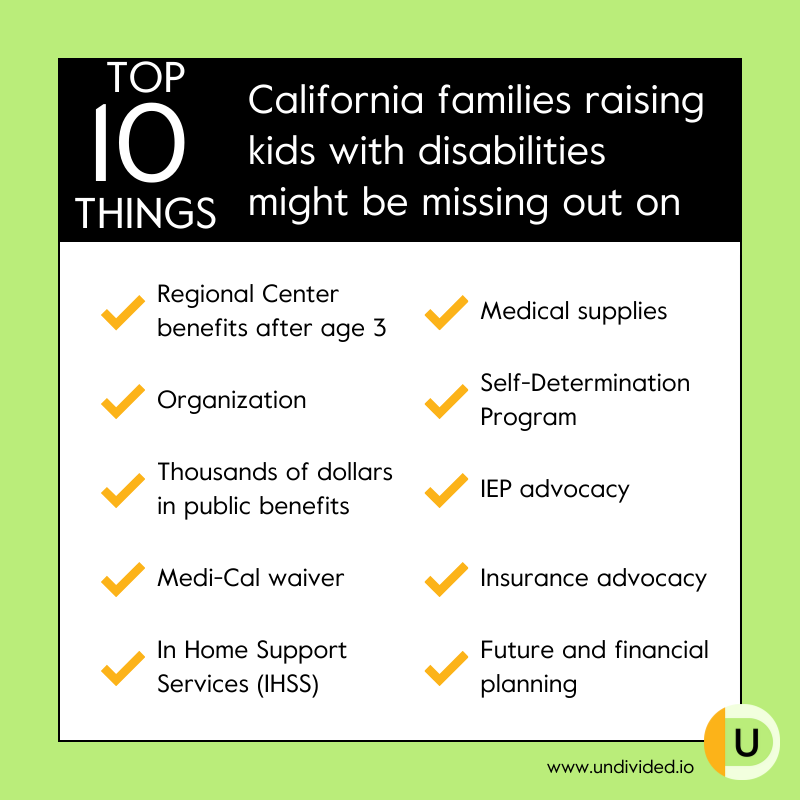
10 benefits you might be missing out on
Some of California’s most valuable supports for kids with disabilities are also the easiest to overlook. Beyond Medi-Cal and Regional Center, there are funding programs, discounts, equipment resources, and other benefits that can make a real difference for your family. We’ve rounded up 10 programs worth checking to see if you’re eligible. Read more about programs in California.
Transition-age benefits after 18
Turning 18 can bring big changes to your child’s services and benefits. From Regional Center and Social Security to the Department of Rehabilitation and school transition supports, there are several programs that can help your teen prepare for adulthood. Here’s a guide to the benefits, services, and planning steps families should know about before that milestone arrives. Read more about the transition to adulthood.
Numbers to note: $21,000
Qualification for Medi-Cal is primarily based on income. There is also an asset test for many recipients with disabilities, meaning you cannot qualify for Medi-Cal if you own greater than the specified amount. As of January 1, 2026, the limit is $130,000 for one person or $195,000 for a married couple. However, that limit is set to dramatically decrease in a year. Starting July 1, 2027, the asset limit for Medi-Cal will be $21,000 for individuals or $31,000 for couples. Read more about Medi-Cal’s asset limits here.
Hot topics
- We’re moving out of California. What disability benefits are available in other states?
- My child has a low-incidence disability. What California public benefits might they qualify for?
- Where does the funding for Medi-Cal and other disability programs come from?
- How does residential placement affect public benefits?
Undivided Updates
- CA budget 2026–2027: what families need to know. California’s new budget brings important wins for families of children with disabilities — from increased special education funding to protections for Medi-Cal, IHSS, and other critical programs — but there are still a few things to keep an eye on. Read more about the budget updates.
- SDP services and spending plans might be facing more scrutiny. A new DDS policy could shape how Regional Centers fund services and how much flexibility SDP families have — here’s what’s changing and how you can weigh in before the final decision. Read more about the policy.
- The assault on Olmstead & the future of disability rights. A new federal memo questioning decades of disability protections has advocates concerned — here’s what families need to know about Olmstead, changes at the Department of Education, and how to make your voice heard. Read more about Olmstead.

Office hours → Wednesday, July 15, 12:00 p.m. PT
Do you have questions about homeschooling or transitioning your child to/from homeschool? Join us for office hours with Undivided Navigator Jessica Coker-Lentz. Office hours Zoom sessions are open to Undivided members only, so if you’re not a member yet, get started here to join us for office hours every week. If you’re not a member, sign up here to participate→
Undivided Conversations → Sunday, July 11, 10:00 a.m. PT
California Public Benefits: Tune in to a re-streamed conversation with Undivided Public Benefits Specialist Lisa Concoff Kronbeck who’ll walk you through five California public benefits your child may be eligible for, including Regional Center, Medi-Cal, In-Home Supportive Services, California Children’s Services , and Supplemental Security Income — plus other government programs in California that help provide funding and care. Streaming on Facebook and YouTube.

 We’re hosting a summer giveaway for our community! Find out more in our private Facebook group for parents→
 Could your child get Medi-Cal if they don’t qualify for Regional Center services? Hear from Public Benefits Specialist Lisa Concoff Kronbeck on YouTube→
 The Olmstead decision, which helps individuals with disabilities receive Medicaid services at home instead of in institutions, is under threat. Learn why it’s important and what you can do in this Instagram post→
 We’re committed to helping you stay up to date on news affecting disability benefits. Connect with Undivided on LinkedIn→