
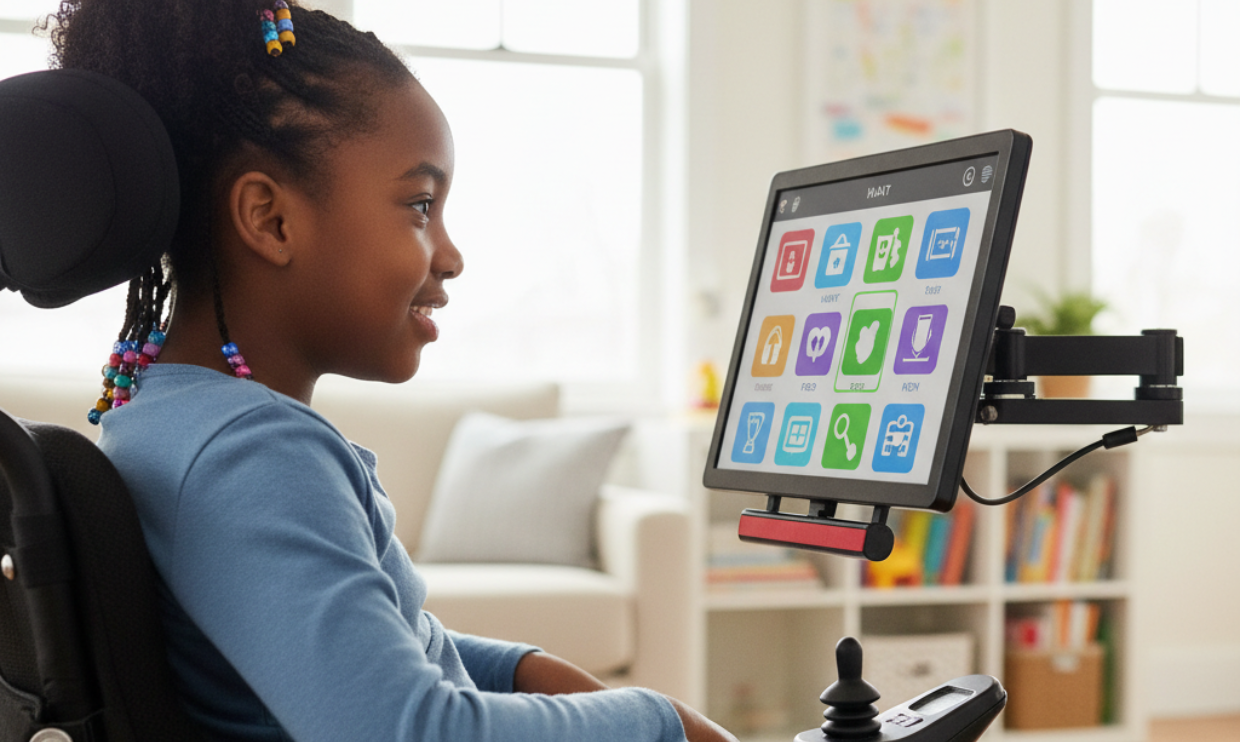
Communication plays a role in every part of our kids’ lives — how they share needs, connect with others, express themselves, and access learning. When communication doesn’t look like spoken words, families are often left navigating big questions about literacy, school support, and long-term independence. Maybe you’ve been told that augmentative and alternative communication (AAC) and reading don’t go together, that speech has to come first, that they don’t need AAC if they “can talk,” that they don’t need speech goals in the IEP if they use AAC, that using a device isn’t “real writing,” or that your child is too young (or too old) to start using AAC, even when that doesn’t match what you see in your child.
This week, we’re busting AAC myths and digging into communication supports — from how AAC supports both communication and literacy to tools like eye-gaze, IEP speech and language goals, and expert tips for parents.
AAC basics. AAC can feel like a lot to navigate. What is it, what kinds of devices are available, and how do you know if it’s right for your child? Brush up on augmentative and alternative communication (AAC)→
Speech and language therapy. Speech and language delays are very common among children with disabilities. Wondering when to start speech and language therapy, what sessions should look like, or how it supports reading and learning? Speech therapy basics→
AAC IEP goals. If your child uses AAC or may benefit from it, what should their IEP include? AAC-focused IEP goals from a speech therapist→
Speech and language IEP goals. Not sure if your child’s speech and language goals are doing what they should? IEP goals for speech and language→
Top communication tools and tech. Looking for the ultimate list of tools to support articulation, social skills or alternative communication methods? Top communication tools, apps, assistive technology, and more→

Eye gaze technology. Eye gaze lets children communicate or use technology using their eyes. Find out if your child would benefit, steps to set it up, and more. Learn about eye gaze technology→
Reading, writing, and AAC. AAC can play a powerful role in literacy development, helping kids build language and participate more fully in school and everyday life. Learn how AAC can support reading and writing instruction, the difference between symbol-based and text-based devices, parent tips, and more. AAC users can learn to read and write. Here’s how→
IEP tips for AAC and literacy. Wondering how AAC supports for reading and writing fit into an IEP? Explore our tips on literacy goals, team training, advocacy, and more. IEP tips for AAC and literacy→

Hot topics
- 6 eye gaze myths every parent should know
- My child has apraxia of speech — how do I support them?
- Could my child be a gestalt language processor?
Valentine’s Day visual story
The school day looks a bit different on February 14! Use a Valentine’s Day story to help your child understand expectations around giving and receiving valentine’s cards and treats. Print our Valentine’s Day visual story PDF or make a copy of the Google doc to digitally customize your story. Find it here in the Undivided resource library!

Office hours → Wednesday, February 18, 12:00 p.m. PT
If your child is a Regional Center client in California, are you making the most of the Self-Determination Program? Whether you’re new to SDP or your child is already enrolled and you need help troubleshooting, join us for office hours with Iris Barker, our Self-Determination consultant. During office hours, you can ask your question in our members-only Zoom session and get answers right away. If you’re not a member, sign up here to participate.
Undivided Conversations
- Saturday, February 14, 10:00 a.m. PT: AAC and Literacy in the IEP. Join Ali Steers, MA, CCC-SLP, and Elizabeth Burnett Rossi, PhD, for a new conversation on why literacy is essential for AAC users — and how reading, writing, and full participation should be part of every AAC system. Catch the conversation streaming on Facebook and YouTube.
- Sunday, February 15, 10:00 a.m. PT: Childhood Apraxia of Speech (CAS) 101. Join us as we return to this deep dive into childhood apraxia of speech with Speech Language Pathologist and VP of Programming for Apraxia Kids, Laura Moorer, MS, CCC-SLP, and Emeritus Speech Pathologist, Dr. Edythe Strand, PhD. They share their insights. Learn about the signs, treatments, and support strategies for children with apraxia. Catch the conversation streaming on Facebook and YouTube.

 It’s a myth that using AAC will inhibit a child’s verbal speech! Hear the facts from SLP Ali Steers on our YouTube channel→
 Wondering if your child would benefit from AAC? Check out the 3 signs in this Instagram post→
 This week in our parents-only Facebook group: adaptive sports, accessible hiking trails in Burbank, respite for moms, and more! Join the discussion→
 Spread the word about AAC to help more families and gets kid the support they need! Share Undivided resources on LinkedIn→
Undivided Voices Podcast Season 2 Episode 4: How Eye Gaze AAC Really Works (And What Families Should Know)
?️ In this episode, experts break down how high-tech eye gaze systems, why eye gaze isn’t plug-and-play, why professional support and proper calibration are essential, and what real-life use actually looks like at home, at school, and in everyday settings. Now streaming on Spotify, Apple Podcasts, Amazon Music, and anywhere you listen to podcasts.