
“SMART” IEP goals are great… but there’s a better IEP in town, and it’s got a lot to say. With IEP season in full swing, we’re setting our sights on what actually makes an IEP great: it’s strength-based and has goals that are standards-aligned, generative, pivotal, inclusive, and truly meaningful for your child. That’s a mouthful! Keep reading as we unpack what all this terminology means — and how it can transform your child’s IEP.

What are good goals made of?
Start with our parent’s guide to IEP goals for a clear overview of how goals are determined, what makes a strong IEP goal, and how to write goals that are appropriately challenging. Then dive into practical tips and examples that show you how to rewrite and transform “meh” goals into ones that truly work. Next, take a closer look at the key focus areas that bring strong IEPs to life.
Strong IEPs are…
Strength-based:
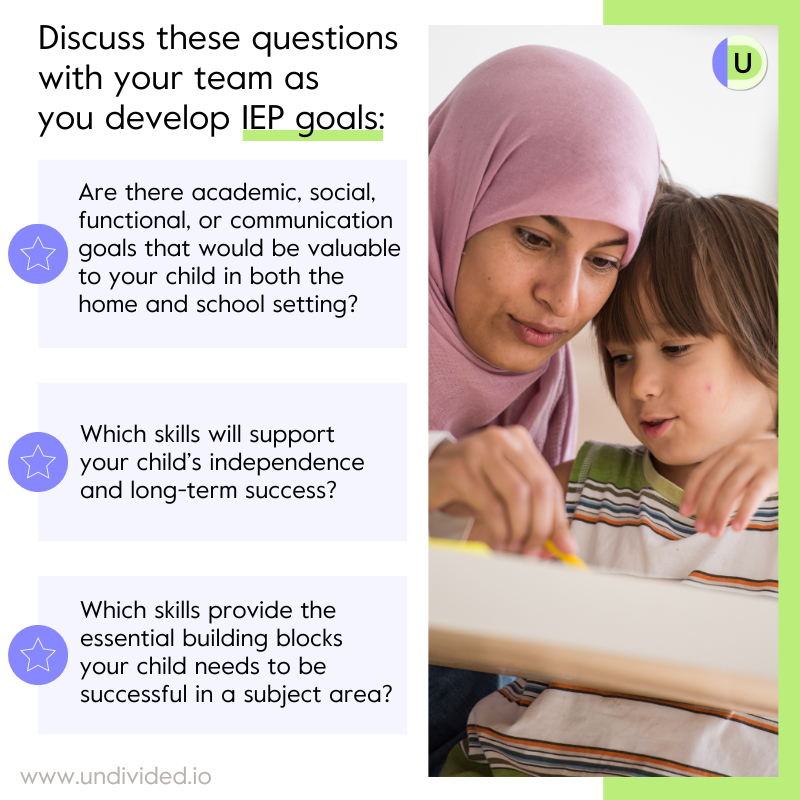
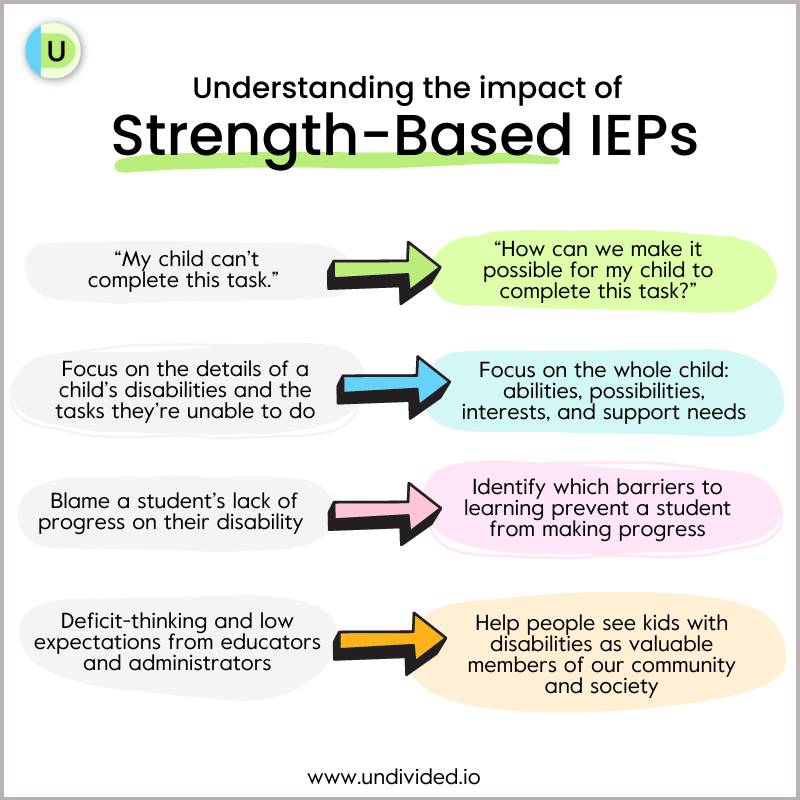
- Prioritizing your child’s strengths helps educators develop appropriately challenging IEP goals and objectives in their curriculum. Ask yourself, “Does the IEP build on my child’s strengths rather than focusing on deficits or trying to “fix” a disability that’s part of who they are?” This is how to develop a strength-based IEP→
Standards-aligned (& inclusive):
- All special education students are required to have IEP goals aligned with the state standards for their grade level. But how can goals be grade-level aligned if a child is behind? And how can we make sure a child can work toward the same meaningful learning as their peers? Catch our 12 parent tips for standards-based IEP goals→
- What happens when a child isn’t quite ready to work on grade-level standards as written? That’s where Core Content Connectors, Essential Understandings, and Dynamic Learning Maps come in — to help bridge the gap for both children with disabilities and their neurotypical peers. Learn about CCCs, EUs, and Dynamic Learning Maps→
Generative, pivotal, & meaningful:
- Strength- and standards-based goals are a strong foundation, but truly great IEPs need a little more magic. Ask yourself, “Is this goal pivotal — will it help my child with skills that will benefit them in future environments that we haven’t even anticipated yet? Is this skill generative — does it lead to and spark other important skills? Is this goal actually meaningful for my child’s life?” Read our 10 expert tips for creating meaningful IEP goals→
Need a hand reviewing those goals?
Not sure if your goals are truly meaningful, strength- and standards-based — and all the other magic we talked about? Try our IEP Assistant before your next meeting. Just upload your draft, and it will organize your document and guide you through each goal alongside its baseline (when included), related present levels of performance, and any short-term objectives, with smart suggestions you can save, edit, or skip at your own pace. Learn more about IEP Assistant here, and try it out yourself.
Dive deeper:
- 5 sample strength-based IEP goals and present levels
- How do I create a vision statement for my child?

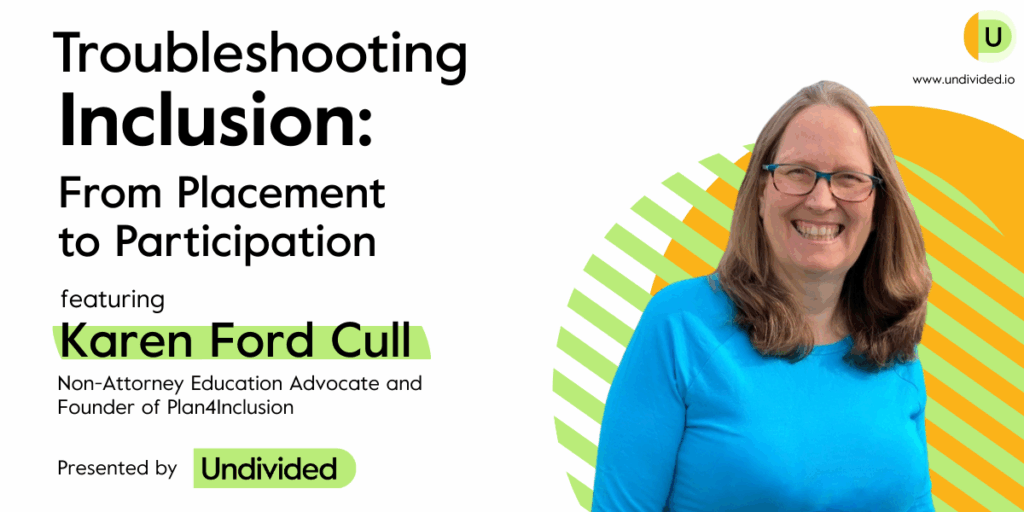
FREE live Q&A – RSVP now!
Troubleshooting Inclusion – Thursday, March 19, 12:00 p.m. PT
Participation with peers helps our kids with IEPs build invaluable skills at school, but so many barriers can get in the way of meaningful inclusion. How do we make sure our kids can benefit from socializing with and learning alongside their peers in gen ed? Join us for a FREE live Q&A with education advocate Karen Ford Cull, who specializes in inclusion. Register for free here→
Office hours → Wednesday, March 4, 12:00 p.m. PT
Every spring, Undivided’s Research Team rounds up a huge list of disability-friendly summer camps in California, and Lead Researcher Adriana Roze is joining us for office hours to give us the scoop! Get tips for finding the right summer camp for your child, and ask questions about how the Research Team can help you with a custom report. If you’re not a member, sign up here to participate.
Undivided Conversations
- Saturday, February 28, 10:00 a.m. PT → Standards-Based IEP Goals. Dr. Caitlin Solone, education advocate, teacher educator, and faculty at UCLA, explains how to develop standards-based IEP goals that work for kids during this live event with Undivided. Catch the conversation streaming on Facebook and YouTube.

 Why do our kids deserve standards-based IEP goals? Hear from Kristin Wright and Stephanie Coleman on our YouTube channel→
 It’s a huge misconception that students can’t be in gen ed if they’re behind grade level. Dr. Caitlin Solone busts this myth on Instagram→
 This week in our Facebook group: spotlight on teachers helping teens read, upcoming webinars for parents about transitional college experiences, and more! Join the discussion→
 Help us share resources for families and providers so that every IEP can be strength-based! Share Undivided resources on LinkedIn→
Undivided Voices Podcast Season 2, Episode 6: Understanding Related Services in Your Child’s IEP
🎙️ In this episode, Dr. Sarah Pelangka, special education advocate and owner of KnowIEPs, breaks down services like speech therapy, OT, 1:1 aides, AAC, counseling, and more, and explains how to know if your child is getting the right support. Now streaming on Spotify, Apple Podcasts, Amazon Music, and anywhere you listen to podcasts.