
General education classroom, special education classroom, homeschool, non-public school, private school, residential placement, independent study — there are a lot of placement options, and figuring out what’s right for your child can feel overwhelming (and often super emotional), especially if you and the IEP team don’t see eye to eye. If you’re weighing options, asking questions, or wondering whether your child’s current placement is the right fit, we’re here to help you make sense of it all.

Explore the least restrictive environment (LRE)
Placement is tied to the idea of LRE, meaning our kids should be included with peers in general education as much as possible while still getting the supports they need — though agreeing on how that works isn’t always simple. Placement discussions are meant to start with inclusive options, like GenEd with accommodations, modifications, and 1:1 aides, or a mix of GenEd and SpEd classes, before moving toward separate classrooms, separate schools, home education options, and finally, the most restrictive options. But how is all this decided and what’s the best fit for your child? Explore LRE and how placement is decided→
If public school doesn’t seem like the right fit…
Separate schools:
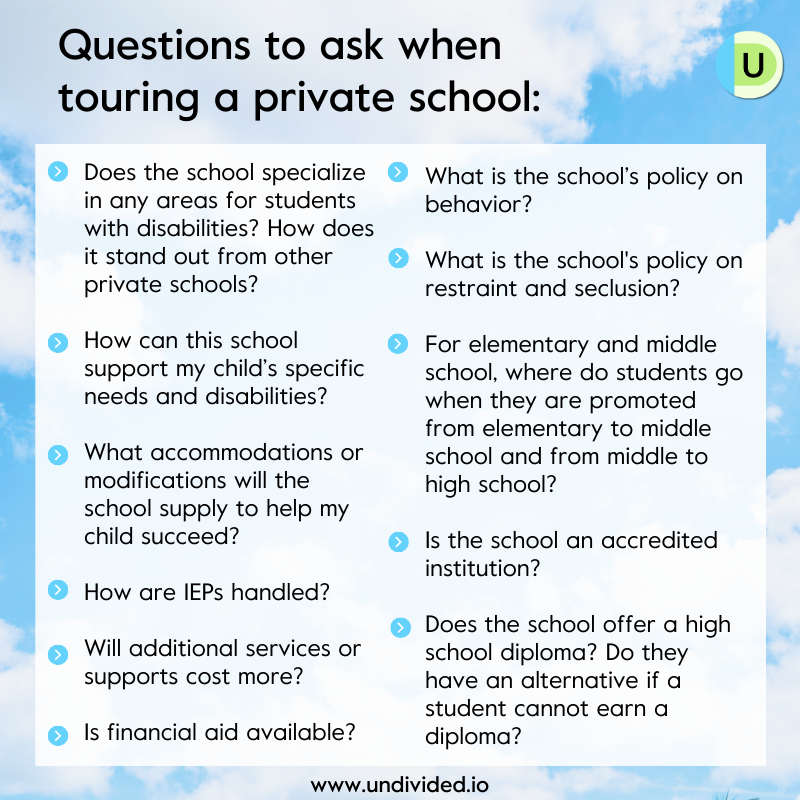
- Private school can be a promising option for some families, but it comes with important differences to understand. Private schools operate independently and aren’t always required to provide special education services or accept students with disabilities. Learn about private school→
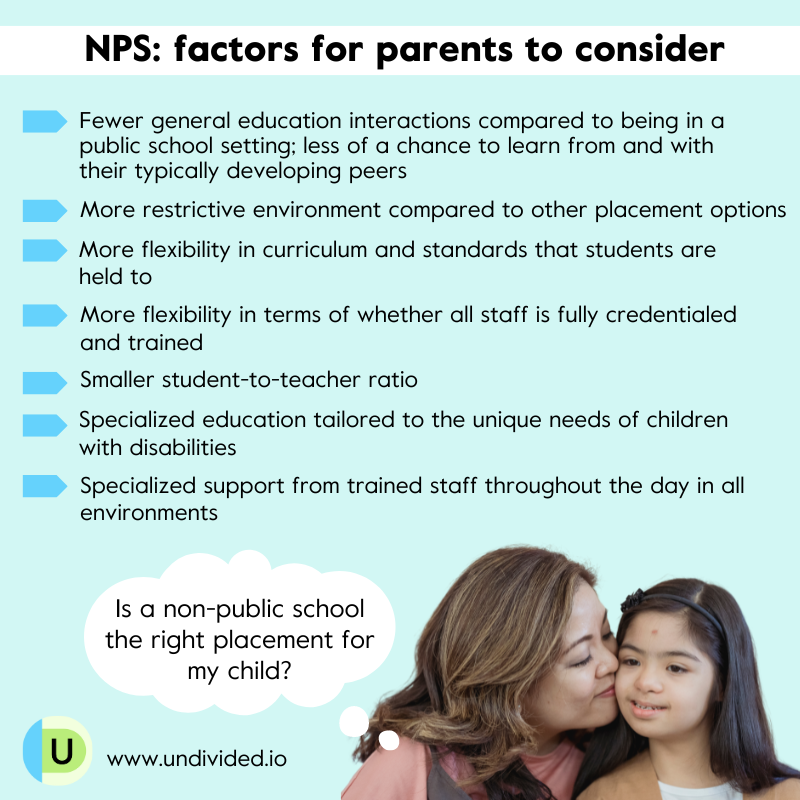
- A non-public school (NPS) is a separate school for students with various disabilities who need more support than a general education setting can provide. But is it right for your child? Read about NPS here→
Home education options:
- Independent study offers students a way to learn outside the traditional classroom. Explore how it works within special education in our newest article. Independent study in California→
- Homeschooling is more than cozy learning at home, especially when your child has an IEP and needs services. We break down homeschooling options, from charter schools to curriculum choices and more. Homeschooling in California→
- Home Hospital (HH) can help when your child needs to step away from school temporarily due to illness or mental health needs. But who qualifies for the program, how does it work, and what are the steps to request it? Learn about home hospital here→

Most restrictive environments:
- Residential placement is the most restrictive option in which the student lives at a residential facility where they access their schooling. Our new article breaks down residential placement and what parents need to know. Read about residential placement here→

Disagreeing about placement?
What can you do when your child’s placement no longer feels like the right fit — whether they need more support, less support, or a change in setting? What to do if your child’s placement isn’t working→
If they say, “Your child is not at grade level. They can’t keep up in a gen ed classroom,” you say…? 8 ways to respond to your IEP team when you disagree about placement →

Office hours → Wednesday, February 25, 12:00 p.m. PT
If you’re a California resident, join us for office hours with Lisa Concoff Kronbeck, Undivided’s public benefits specialist, to ask your questions about Regional Center, IHSS, SSI, Medi-Cal, and other public benefits programs. If you’re not a member, sign up here to participate.
Undivided Conversations → Saturday, February 27, 10:00 a.m. PT
Residential Placement 101: In this brand new conversation, Non-Attorney Education Advocate Hadassah Lynn Foster, Education Consultant Kelly Rain Collin, Senior Attorney Diana Maltz, and Special Education Attorney Tania Whiteleather explain what residential placement is, when it may be appropriate, and how it works within the special education system. Catch the conversation streaming on Facebook and YouTube.

 Can the school change your child’s location without changing their placement? Learn the difference here on our YouTube channel→
 What does special education law say about placement? Save this Instagram post for a quick explanation→
 This week in our parents-only Facebook group: GPS tracker recommendations, a public benefits survey, helpful webinars, and more! Join the discussion→
 Keep track of important issues facing the disability community! Connect with Undivided on LinkedIn→
Podcast → Undivided Voices Season 2, Episode 5: California State Budget 2026-27 Explained
🎙️ In this episode hosted by Undivided’s Lindsay Crain, Deputy Director of Policy and Public Affairs for the State Council on Developmental Disabilities, Christofer Arroyo, breaks down what’s in the proposed budget, what potential cuts could mean for families, and why now is the time to make your voice heard before the July deadline. Now streaming on Spotify, Apple Podcasts, Amazon Music, and anywhere.