
Learning to read, write, and do math doesn’t just magically happen for every kid — especially kids with disabilities. It takes the right supports, thoughtful teaching, and someone believing in what our kids can do. Still, a lot of families hear things like “They’ll catch up” or “Math just isn’t their thing.” When learning doesn’t look typical, expectations can slowly drop, even though we know our kids are capable of so much more when they’re taught in ways that actually work for them.
This week, we’re answering the most common parent questions and sharing what really helps kids thrive in reading, writing, and math!

Reading FAQs
- Do phonics and the Science of Reading actually work for kids with disabilities?
- What is this Reading Rope everyone keeps talking about?
- What do IEP assessments for reading measure?
- Help! I need strong reading goals for my child’s IEP!
- My child has dyslexia. Where do I even begin to support them?
Writing FAQs
- How can my child learn to write if traditional writing just doesn’t work?
- My child struggles with handwriting. Could it be dysgraphia?
Math FAQs
- How can I (and the school) make math work for my child?
- Is algebra realistic (and accessible) for my child?
- What do I need to know to write good math goals for the IEP?
- Math feels so hard for my child — could it be dyscalculia?
Tech corner
- Reading tools & apps to support your child’s reading goals
- Writing supports & AT for handwriting, spelling, typing, and more
- Math tools & games to make math more accessible (and fun!)

Undivided Updates
Check out the highlights from our roundup of California legislative updates for January 2026:
- The new state budget proposal and its timeline
- New proposals for extended school year (ESY) and Early Start eligibility, with Zoom links for upcoming public hearings
- The new Department of Rehabilitation (DOR) order of selection process, i.e. a waitlist for services
- “Two-year bills” that need to be considered by January 31, so reach out to your legislators and encourage their support!

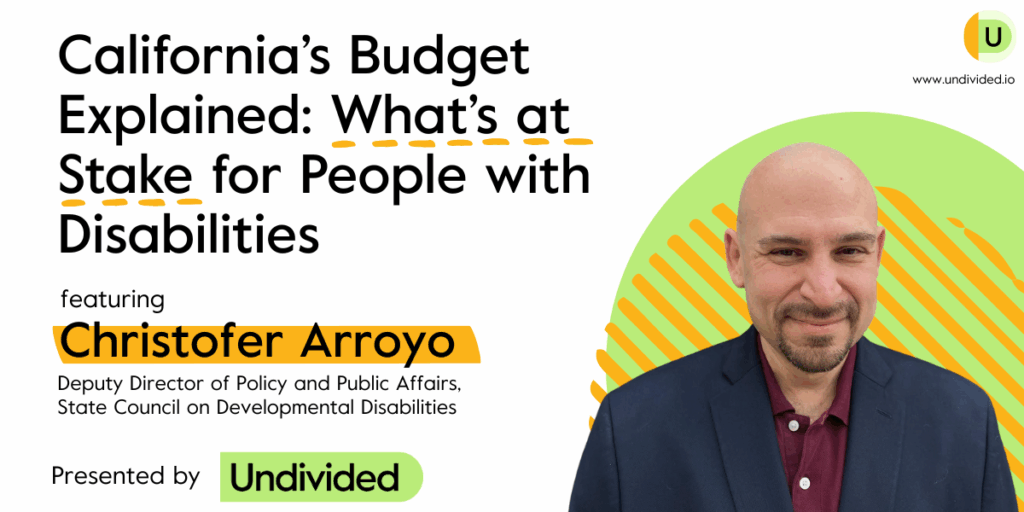
FREE live event → Tuesday January 20, 2026, 10:00 a.m. PT
California’s Budget Explained: What’s at Stake for People with Disabilities
California Governor Newsom announced the proposed 2026-27 state budget on January 9. What does the budget proposal mean for programs that impact our kids, and how can we make our voices heard? Join us for a FREE live event with Christofer Arroyo, Deputy Director of Policy and Public Affairs for the State Council on Developmental Disabilities, to get the breakdown and ask your questions! Register for free here to get the Zoom webinar link and full recording! And a huge thank you to our community partners for this event!
FREE live event → Thursday January 29, 2026, 12:00 p.m. PT
Meet our new IEP Assistant!
Get ready for the launch of Undivided’s new IEP Assistant with a walkthrough of our brand-new innovative digital tool! Join Undivided CEO Seth Besse on Thursday, January 29 at 12:00 p.m. PT to see how IEP Assistant works, ask your questions, and get an inside look at how Undivided is revolutionizing IEP prep. This free Zoom webinar is open to all! RSVP here to get the livestream link and full recording.
Office hours → Wednesday, January 21, 12:00 p.m. PT
Join us for office hours with non-attorney education advocate Lisa Carey, where you can get expert answers for your questions about special education and IEPs. If you’re not a member, sign up here to participate.
Undivided Conversations
Join us on our Facebook page:
- Saturday, January 17, 10:00 a.m. PT → Rethinking Reading for IEPs. Join experts Chris Lemons and Kathleen Whitbread, PhD, for a fresh look at how reading instruction can better support kids with disabilities through IEPs.
- Saturday, January 17, 12:00 p.m. PT → Rethinking Writing for IEPs. Writing can be challenging — and powerful. Tune in as Katie Olds, MOT, OTR/L, and Toby Tomlinson, PhD, share practical ways to support writing for students with disabilities.
- Sunday, January 18, 10:00 a.m. PT → Rethinking Math for IEPs. Math feeling hard? You’re not alone. Join Sarah Noland and Dr. Rachel Lambert, PhD, for practical strategies and resources to make math more accessible for diverse learners.

 What’s the best approach for teaching kids to read: phonics or sight words? Hear an expert weigh in→
 Could a child’s struggles in math be due to dyscalculia? Check out the 4 signs of dyscalculia→
 This week in our Facebook group for parents: how CCS and Medi-Cal work together, a new Barbie with autism, a survey for LAUSD parents, and recommendations for an Independent Facilitator. Join the discussion→
 Stay updated on disability rights, legislation, and other important topics for our families. Connect with Undivided on LinkedIn→