
In a recent survey, we heard that 54% percent of parents didn’t know if their child was eligible for California’s new alternative pathway to a diploma, and 52% of parents hadn’t discussed high school graduation options with their IEP teams.
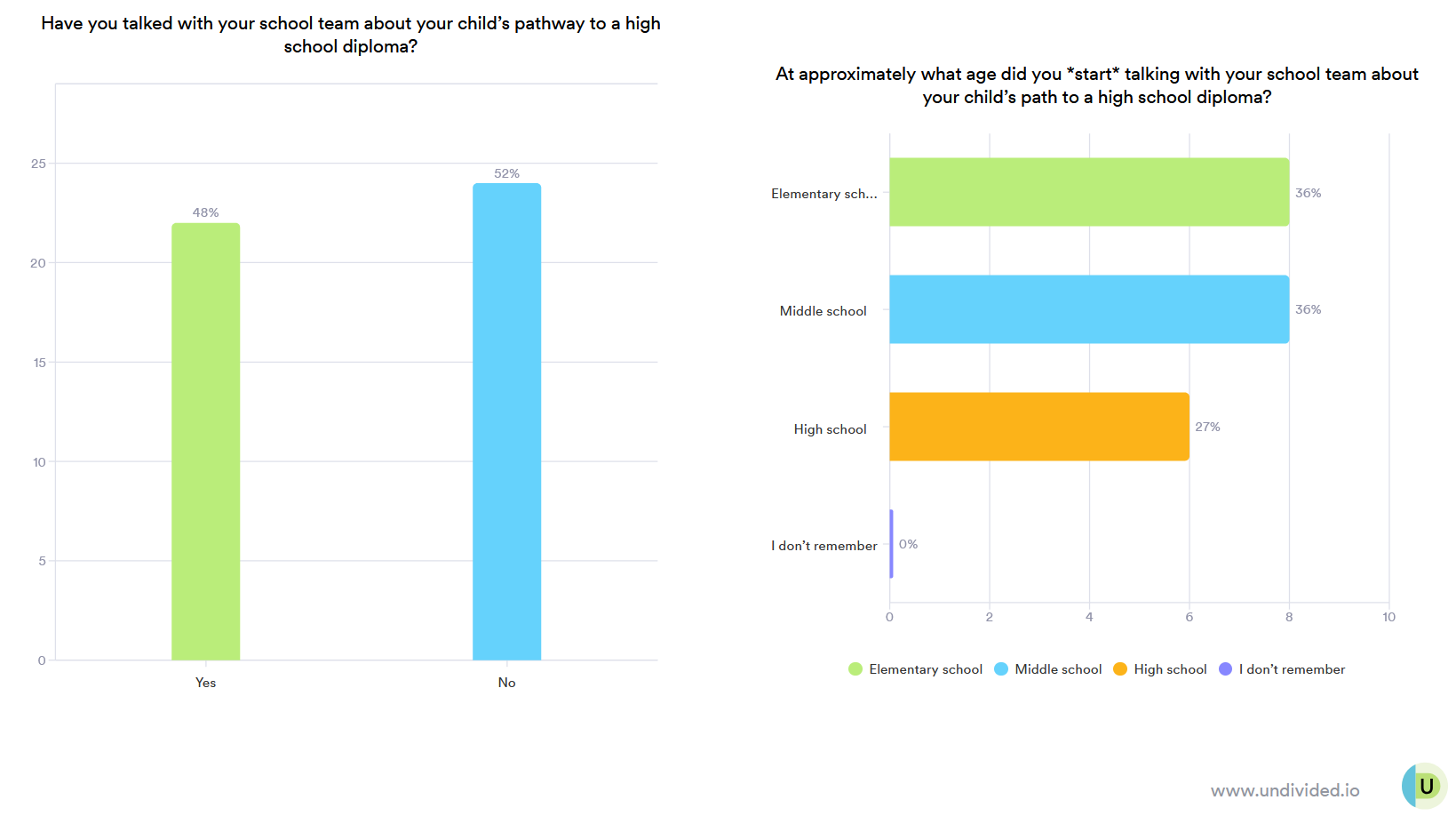
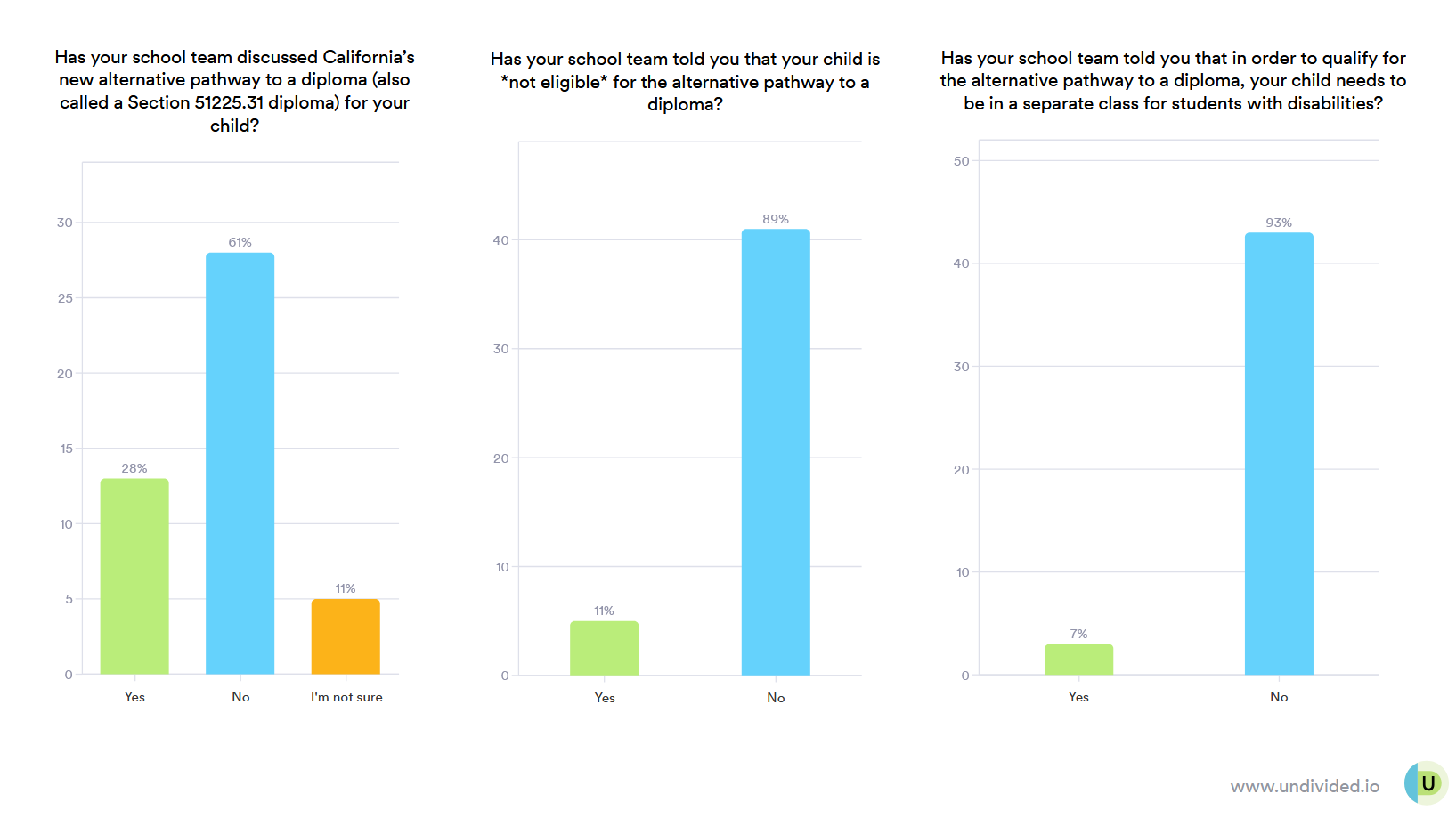
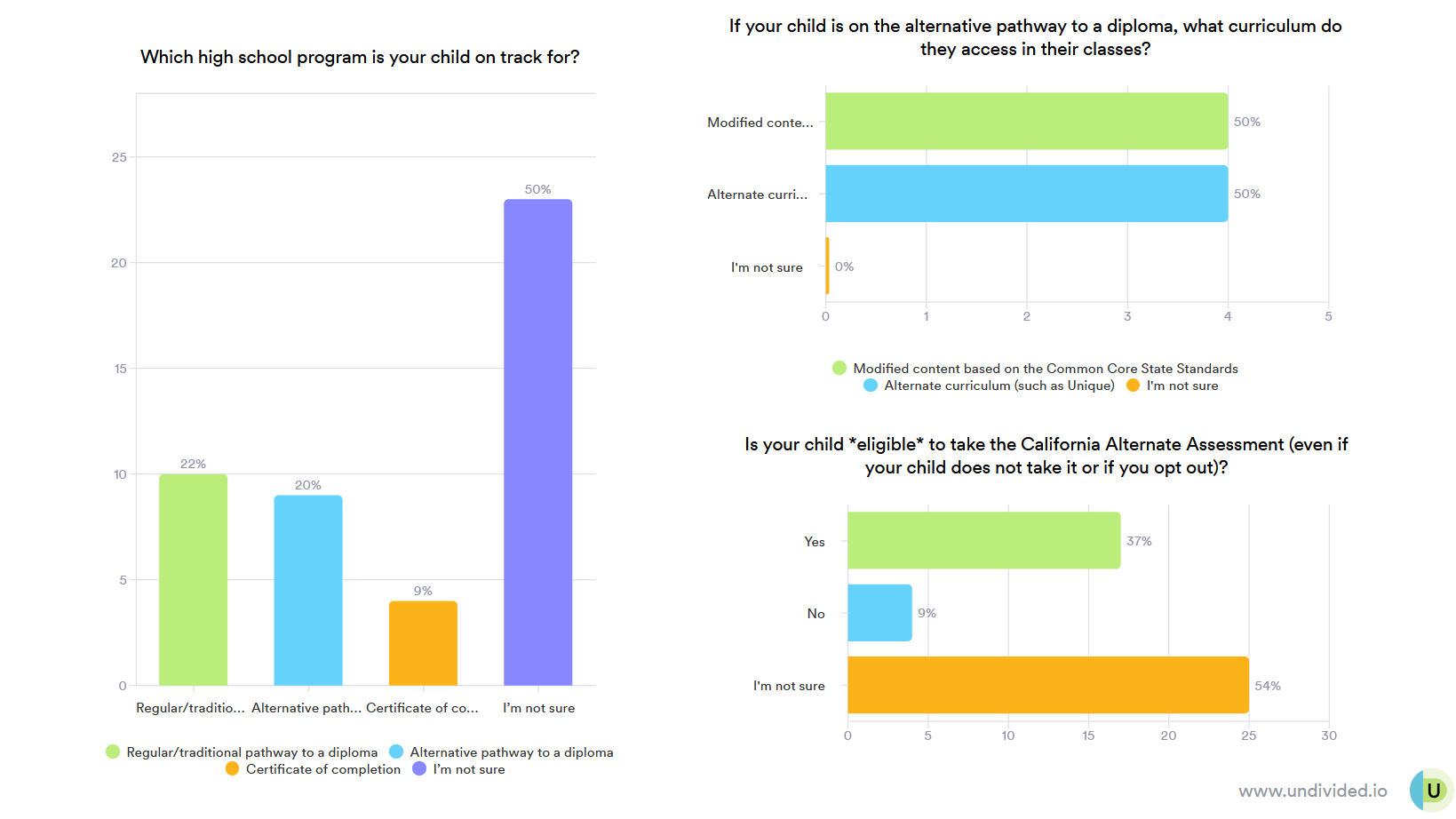
We wanted to address some common questions about high school graduation options, the alternative pathway to a diploma, and the California Alternate Assessment.
1. Not all students with IEPs qualify.
Also known as a Section 51225.31 diploma, the alternative pathway was designed for students with the most significant cognitive disabilities, meaning “a disability or multiple disabilities that significantly impact intellectual functioning and adaptive behavior essential for a person to live independently and to function safely in daily life,” according to the California Department of Education. The CDE has provided a useful worksheet for IEP teams to use in making this decision. Note that students who have specific learning disabilities as their primary IEP eligibility category do not qualify for this diploma.
2. Eligibility depends on whether a student qualifies for the California Alternate Assessment.
The California Alternate Assessment (CAA) measures student knowledge and skills based on California’s alternate achievement standards, which are modified versions of the Common Core State Standards. A student does not have to take the CAA in order to pursue the alternative pathway (parents are allowed to opt out), but they do need to be eligible.
Note that this is a small group of students — the federal Every Student Succeeds Act limits the number of students who take alternate assessments to no more than 1% of all students. The U.S. Department of Education estimates this to be approximately 10% of all students with disabilities.
3. A student does not have to be in a segregated placement to be eligible for the alternative pathway to a diploma.
We heard that some parents are being told by the school that students in general education classes are disqualified from the alternative pathway to a diploma, or that their child would only be eligible if in segregated classes where they have access to an alternative curriculum. IDEA still applies—students should be educated in the least restrictive environment, and students can earn their diploma taking general education classes with assignments that are modified according to the aligned alternative achievement standards. Eligibility does not depend on placement.
4. Students on the alternative pathway to a diploma can still receive special education services from the school district until age 22.
To obtain this diploma, students must meet the state’s minimum coursework requirements, and they have until age 22 to do so. If a student graduates with an alternative diploma earlier, they can still participate in age 18-22 transition programs and still receive special education services until age 22. Only after leaving the school district will Regional Center step in to provide adult services. It’s important to note that if a student receives a standard diploma, they exit special education as soon as they graduate and will transition to Regional Center adult services then.
5. Districts and parents should work together to find ways for a student to earn a diploma.
In California, school districts are now required to begin transition planning in eighth grade, which should include planning the student’s pathway to a high school diploma. However, decisions made years before, even in elementary school, can affect whether a student is on track to receive a diploma. We encourage families to discuss this with their IEP teams and clearly communicate their vision for the future. The student’s course of study should be discussed at every annual IEP, and students who have already been in high school for several years should still be able to start working on the pathway. Districts are not always informed about the new pathway, so parents may need to ask.
Note that this new diploma pathway leaves out a large group of students who are not eligible for the CAA, but who still struggle to complete the state and local graduation requirements necessary to receive a standard high school diploma. We provide more resources and information in our article High School Graduation Options for Students with Disabilities in California.
We’re also excited to announce an upcoming live event to dive deeper into this topic. On Tuesday, November 18, Undivided is hosting a FREE webinar training and Q&A with Kristin Wright and Stephanie Coleman, two experts from Inclusive Practices and Integrated Systems at the Sacramento County Office of Education. RSVP for our free event here.