

Mental health in kids is rarely simple, and rarely fits into just one neat label. For our kiddos, it can feel like everything is layered on top of everything else. Anxiety, tics, compulsions, emotional regulation struggles, and trauma responses don’t always show up separately or take turns. They can overlap, interact, and sometimes make it really hard to know what you’re even looking at. And here’s the thing: what we see on the outside doesn’t always tell the full story. OCD, trauma, and tics don’t always look like what we see in the movies — especially in kids.
This week, we’re going a little deeper into Tourette syndrome, OCD, and pediatric developmental trauma — what they can look like, how they can connect, and some ways to support your child as they move through the world with these challenges.

What is Tourette syndrome?
Can kids with tics just stop if they try hard enough? Nope! It’s one of the most common misconceptions about Tourette syndrome, and one of the most important ones to unpack, especially when a teacher is telling you your child is being deliberately disruptive in the classroom. They’re not. The truth is that tics are very sensitive to stressors in the environment — while a child may be able to suppress a tic briefly when asked, it will almost always return — often with greater frequency.
So how do we support a child with Tourette syndrome? “Sometimes the best outcome of treatment is that the child and family learn more about the tics, the school gets educated, and the child is able to manage their tics in most situations — but may tic freely in others,” expert John Piacentini, PhD tells us. Read about Tourette syndrome.
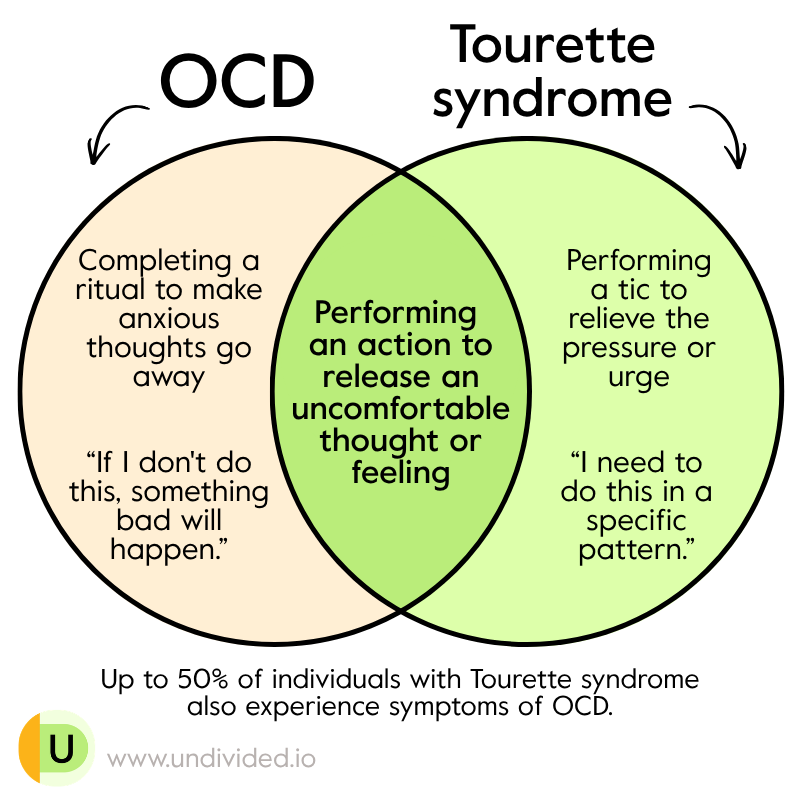
What is obsessive-compulsive disorder?
Does your kiddo arrange things until they feel just right? Go back and check things over and over? Ask “Are you sure?” a dozen times a day? Confess every bad thought to you? Redo schoolwork again and again chasing some version of “perfect” that never quite lands? If any of that sounds familiar, there’s a good chance OCD might be part of what’s going on.
OCD is one of the more common mental health conditions in school-age kids and teens, but it gets missed a lot. Check out our articles for insights from our OCD experts. Learn the signs of OCD obsessions and compulsions in kids, find out what the common OCD treatments and therapies are, and get expert tips for supporting kids with OCD at school and at home. (Psst — some therapists work with kiddos to actually give OCD a name, like Doug. As in, “That’s Doug, and we don’t like Doug.” Turns out, bossing back Doug is a pretty powerful first step.)

What is pediatric developmental trauma?
Developmental trauma — sometimes called pediatric or complex developmental trauma — is about enduring experiences that build over time, layered and longer-lasting than what we typically picture when we hear the word “trauma.” It can stem from early experiences like prenatal substance exposure or foster care — but it can also look much subtler than we expect. Kids with disabilities are particularly vulnerable to trauma, yet it often gets overlooked, or chalked up as just “part of the disability.”
That’s where trauma-informed care comes in. Learn more about what pediatric developmental trauma can look like in kids, then explore trauma-informed care, including common therapies and ways to incorporate trauma-informed supports into an IEP.


Event recap → California Legislative and Budget Updates
How will California’s proposed budget for 2026-27 affect individuals with disabilities, and what do families need to know? Whether you missed our live event with Aaron Carruthers from the SCDD or you want to review what we learned, check out our recap in Breaking Down the May Revise 2026-27 California Budget with the SCDD.
Undivided Conversations
Restraint Collapse 101 → Streaming on Facebook and YouTube Saturday, May 30, 10:00 a.m. PT. Does your child hold it together all day at school — only to fall apart the moment they get home? This may be after-school restraint collapse. Tune in as Social Psychologist and Author of Unmasking Autism, Devon Price, PhD, and Clinical Psychologist Theresa Kidd, PhD, break down what restraint collapse actually is, why it happens, and what parents and schools can do to help.
Office hours
Do you have questions about homeschooling or transitioning your child to/from homeschool? Join us for office hours on Wednesday, June 3 at 12:00 p.m. PT with Undivided Navigator Jessica Coker-Lentz. Office hours Zoom sessions are open to Undivided members only, so if you’re not a member yet, get started here to join us for office hours every week. If you’re not a member, sign up here to participate→

 Ever been told your child’s mental health struggles are “just part of their disability?” Learn more about how to respond in this Instagram post→
 How do we help our kids with the ups and downs of their mental health? Hear from Dr. Rita Eichenstein on our YouTube channel→
 This week in our private group for parents: questions about adaptive skills in SDP, summer camp recommendations, and a survey from the SCDD about accessible air travel. Join the discussion on Facebook→
 Spread awareness and share our free resources with other families and providers! Connect with us on LinkedIn→