

What does “making progress” actually mean?
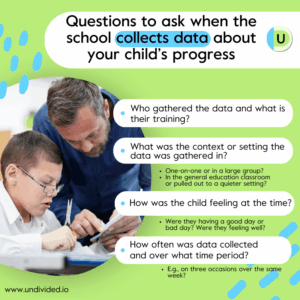
You’ve seen the progress reports, but do you really know what they’re telling you? Behind every “goal met” (or not met) is data that can reveal a lot about whether your child is actually making meaningful progress. The catch? It’s only as good as how it’s collected, and most parents aren’t told what to look for or what to ask (hint: progress reports, work samples, and service logs!). That’s why it’s so important to know how our kiddos’ progress is measured and documented, and that we’re seeing the data regularly, not just once a year.

Fight for your right — to data! Not all IEP data is created equal, and sometimes the numbers don’t tell the full story. Learn what to watch for, what to question, and how to make sure your child’s progress is actually being tracked the right way. Learn about progress reporting for IEPs→
Some of the most important parts of your child’s IEP are all about progress. From present levels (PLOP) to short-term objectives (STOs), these pieces shape your child’s goals, services, and supports — and when done well, offer a clear, meaningful picture of progress. Explore these key parts of an IEP→
How do you know if your child’s IEP is actually being followed? Start with the data, and ask questions. Progress reports should show present levels, goals, and clear numbers showing progress. Review them closely, talk with providers, and ask for service logs or work samples to make sure services are happening as written. How to make sure your IEP is being followed→
What the heck are triennial IEPs? Once every three years, the school should schedule a full evaluation to make sure your child is still eligible for an IEP and check in on their progress. Learn to prep for triennial IEPs→
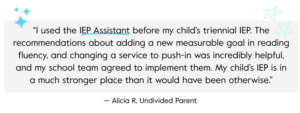
If a triennial is coming up, upload your latest IEP to IEP Assistant to start your review early — and get thoughtful recommendations to guide your next meeting.
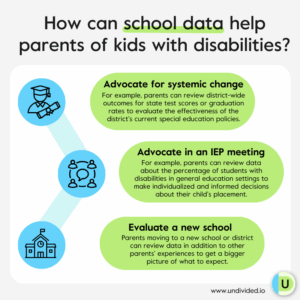
Being “data-driven” goes beyond the IEP. The right public school and district data can help you ask better questions, spot patterns, and advocate with more confidence in your child’s IEP. How to find data about your child’s school district→
Dive deeper
Printables → Data tracking logs and templates, and a digital binder
Undivided members can access our printable yearly progress chart template to track your child’s baseline and growth over time, along with an IEP goal tracker and service delivery log to help you collect clear, reliable data and track any concerns along the way.
Plus, members get access to our secure digital binder where you can keep important documents like these organized in one secure, shareable place — so everything is easy to access when you need it. It also makes it easier to share information with teachers, providers, and caregivers without digging through files or emails. Join here to get started. Happy tracking!

FREE live Q&A – Standards-Based IEPs Done Right
On Thursday, April 9, 12:00 p.m. PT, join us for a FREE live Q&A with Education Advocate and Former Education Director Dr. Diana Fannon as we discuss how to improve access to standards-based curriculum, how to use Core Content Connectors, what kids miss out on with alternate curriculum, how to ask for more inclusion with peers, and ways to push back against schools that want to lower the bar for kids with IEPs. Register for free here→
FREE live Q&A – Getting Ready for Summer with Regional Center and the Self-Determination Program
If your child is a Regional Center client in California, summer may open the door to services like additional respite hours, social-recreation programs, camps, and individualized supports. On Thursday, April 30, 12:00 p.m. PT, join us for a FREE live conversation and Q&A with Undivided’s Public Benefits Specialist and Self-Determination Program Consultant as we talk about how families can prepare for summer now. Register for free here→
Office hours
If you live in California and your child is a Regional Center client, are you making the most of the Self-Determination Program? Whether you’re new to SDP or your child is already enrolled and you need help troubleshooting, join us on Wednesday, April 1, 12:00 p.m. PT for office hours with Iris Barker, our Self-Determination consultant. If you’re not a member, sign up here to participate.
Undivided Conversations: Streaming on Facebook and YouTube
- Saturday, March 28, 10:00 a.m. PT: Foster Care & Adoption of Kids with Disabilities. Thinking about fostering a child with a disability in California — or already on the path to adoption — and have some questions? To help navigate what this journey really looks like, we spoke with Judy Mandolfo of the California Alliance of Caregivers (CAC); Janet Sherwood, attorney and co-founder of Advokids; Eileen Devine, licensed social worker and creator of the Brain First parenting approach; and Shannon Iacobacci, foster-adoptive parent, IEP consultant, FASD specialist, and founder of Embracing the Brain.

 If you’re new to our private Facebook group for parents, we’d love to hear more about you and what your family is going through! Introduce yourself and join the discussion→
 One commonly overlooked secret to conquering an IEP meeting? Having a friend or Navigator there for you! Hear one Undivided parent explain the power of extra support→
 Which data should you ask the school for in advance of an IEP meeting? Education advocate Lisa Carey lists 3 things you should request→
 Has a resource from Undivided made a difference in your child’s IEP? Spread the word on LinkedIn and help other parents too→
Undivided Voices Podcast → S2E10: Troubleshooting Inclusion
🎙️ What does it take to make inclusion work — not just on paper, but in the classroom? In this episode, Non-Attorney Education and Inclusion Advocate Karen Ford Cull shares how to move beyond placement and toward real participation. Now streaming on Spotify, Apple Podcasts, Amazon Music, anywhere.